Block paving in Southampton, laid to last
A block paved drive is only as good as what is under it. We quote for the full job: dig-out, compacted sub-base, edging, the blocks in the pattern you choose, and drainage that keeps the drive legal and dry.
- Concrete blocks or clay pavers
- Herringbone, basketweave or stretcher bond
- Standard or permeable block, drainage planned
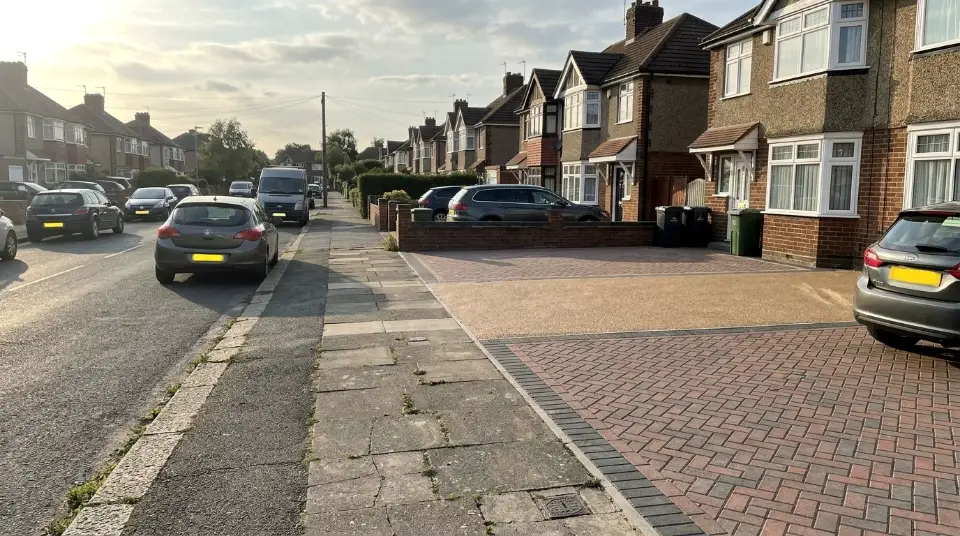
What goes into a block paved drive
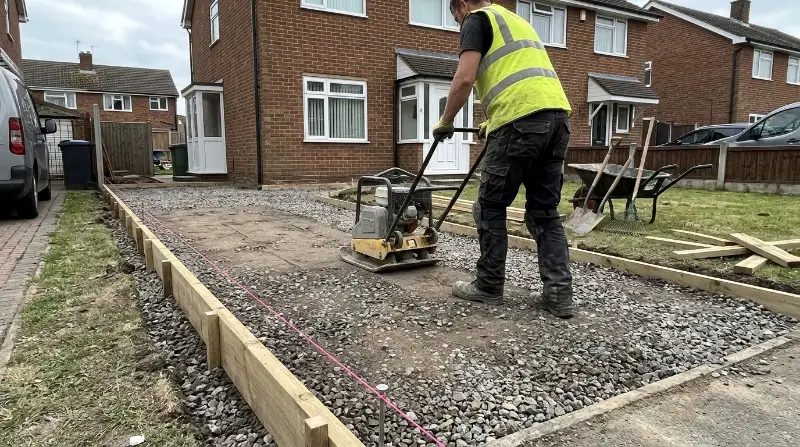
The blocks are the part you see. Most of the work, and most of the reasons a drive sinks or ruts later, sit below them.
- Breaking out and removing the old surface, and digging to the depth the new drive needs
- A geotextile membrane, then crushed stone sub-base compacted in layers
- Fixed edge restraints, laid on concrete, so the blocks cannot creep
- A sharp sand laying course, screeded to the falls agreed on the survey
- Blocks laid, cut, vibrated in and joints filled with kiln dried sand
- Drainage: falls to a border, a channel drain or a soakaway, or permeable block
What block paving costs
Typical installed prices from the BestBuilders 2026 driveway guide. They assume excavation, membrane, compacted sub-base and edging are included. Your own price comes after a site visit.
| Item | Typical price |
|---|---|
| Concrete block paving, per m² | £90 to £150 |
| Clay pavers, per m² | £120 to £170 |
| Small drive, about 20 m² | £1,800 to £3,000 |
| Average drive, about 40 m² | £3,600 to £6,000 |
| Large drive, about 70 m² | £6,300 to £10,500 |
| Channel or linear drain | £60 to £120 per metre |
More detail, including extras like dropped kerbs and soakaways, on the driveway costs page.
Standard block or permeable block?
This is the decision most people do not know they are making. It changes the build under the blocks and whether you need planning permission.
Standard block paving
Blocks with sand filled joints on a normal sub-base are treated as a sealed surface. Over 5 m² at the front, the water has to run to a lawn, border or drain on your own land, or you need planning permission.
Source: Planning Portal: paving your front gardenPermeable block paving
Blocks with wider joints filled with fine grit, on an open graded stone base, let rain soak through. A permeable front drive of any size needs no planning permission.
Source: Planning Portal: paving your front gardenSouthampton ground
Soils across much of the city are slowly permeable, and clay underlies the north and south. Whether rain can soak away below a permeable drive is checked on site, not assumed.
Source: Southampton City Council: Level 2 Strategic Flood Risk Assessment, May 2017, section 4.1.3Patterns, colours and edging
Herringbone at 45 or 90 degrees is the pattern most people ask for on a drive. The interlock spreads the load of turning tyres, which is why it is the usual choice where cars swing in and out. Basketweave and stretcher bond suit paths and patios better than busy drives.
Concrete blocks come in a wide range of colours and tumbled or crisp edges. Clay pavers cost more but hold their colour, because the colour runs all the way through. A contrasting border course, often charcoal, frames the drive and hides the cut edges against walls and lawns.
Ask for samples to be laid out on the drive itself. Colours look very different in a brochure and against your own brickwork.
Points worth settling early
- Do you need a dropped kerb? It needs council approval first, and the timescale differs in the city and the county. See dropped kerbs.
- Where does water go now? Puddles by the front door or against the house are fixed in the levels, not after.
- Inspection covers and drains in the drive area need to be raised or fitted with recessed covers that take blocks.
- Skip or grab lorry access, and somewhere to park the digger and materials, affect the price and the timings.
Block paving questions
How much does block paving cost in Southampton?
The BestBuilders 2026 guide gives typical installed prices of £90 to £150 per m² for concrete block paving and £120 to £170 per m² for clay pavers. An average 40 m² drive is typically £3,600 to £6,000. Your own price depends on the dig-out, drainage and access.
Does a block paved drive need planning permission?
Standard block paving with sand filled joints is treated as a sealed surface. Over 5 m² at the front, it needs planning permission unless rainwater runs to a lawn or border on your land. Permeable block paving needs no permission, whatever the size.
What pattern is best for a driveway?
Herringbone is the usual choice for drives, because the interlocking pattern copes well with turning tyres. Basketweave and stretcher bond tend to suit paths and patios better.
Why do block paved drives sink?
Usually because the sub-base was too thin or not compacted properly, or because water has been getting into it. The fix is to lift the blocks, rebuild the base and relay them, which is why the base matters more than the blocks.
Can block paving be repaired?
Yes. One advantage of block paving is that damaged or stained blocks can be lifted and replaced, and sunken areas relaid, without redoing the whole drive.
Do I need to seal block paving?
It is optional. Sealing helps hold the joint sand, slows weeds and keeps the colour. BestBuilders suggests a clean, re-sand and seal every three to five years.
Price your block paved drive
Send the quick form at the top of the page. Tell us the rough size and whether there is an old surface to remove.